


 By
skapoorcs2013@gmail.com
By
skapoorcs2013@gmail.com
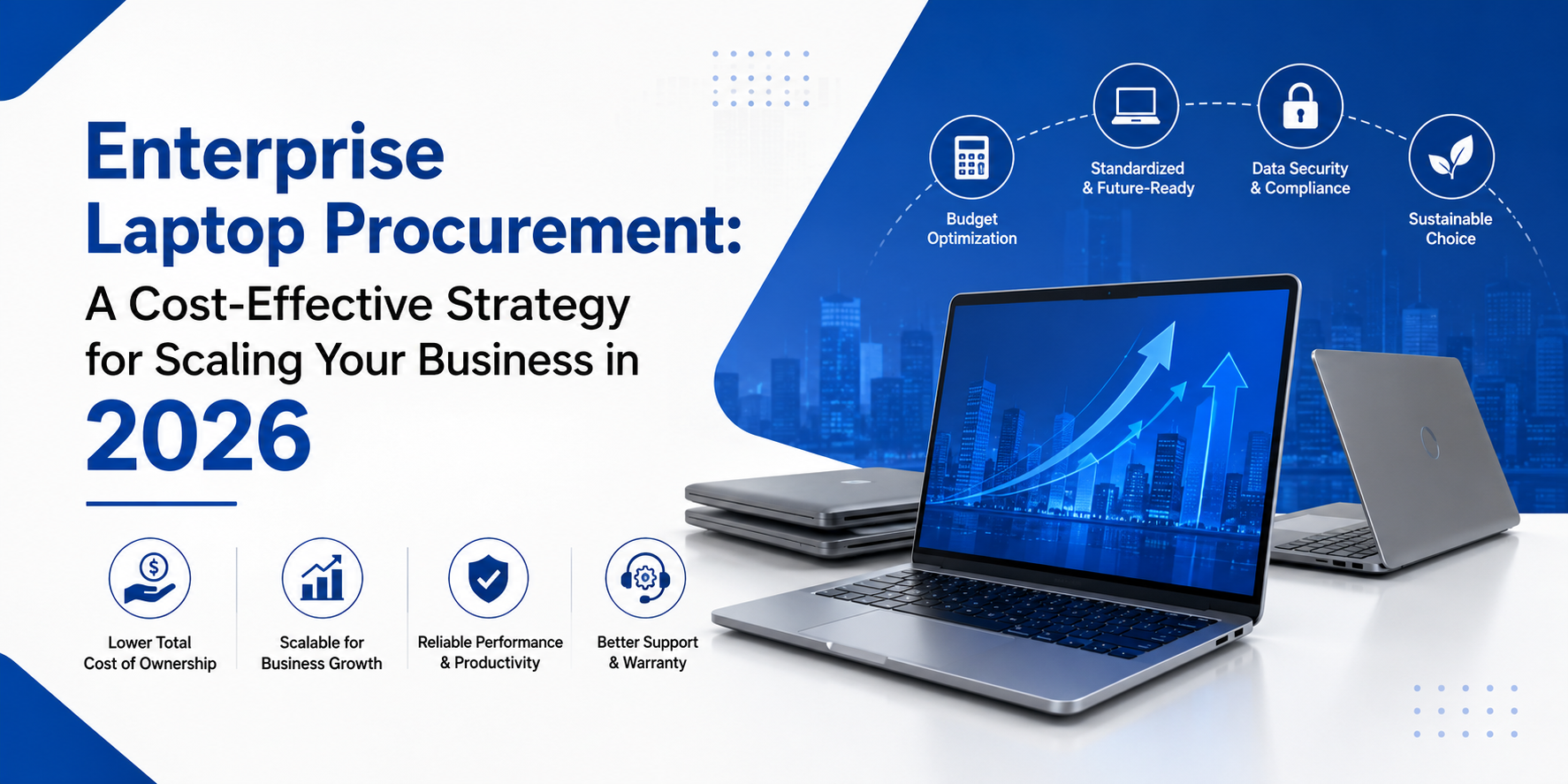
Over the last decade, I’ve sat across the table from CFOs who wince every time IT procurement comes up, and IT managers who dread the annual laptop refresh cycle almost as much as an audit. Having spent 10+ years in IT consulting — helping businesses of every size, from scrappy 15-person startups to 500-employee enterprises — I can tell you one thing with certainty: laptop procurement is rarely treated as a strategic decision, and that’s exactly where most companies lose money.
Most organizations still approach buying laptops the way they’d approach buying office chairs — grab whatever’s cheapest, order in bulk, and move on. But hardware isn’t furniture. It’s the backbone of productivity, security, and employee experience. And in 2026, with hybrid work, AI-powered tools, and tighter IT budgets all colliding at once, how you procure laptops can directly impact how well your business scales.
Let me walk you through how I advise my clients to think about this.
When a client tells me “we need 40 laptops for the new hires,” my first question is never “what’s your budget?” — it’s “what’s your usage pattern?”
Are these laptops for developers running heavy builds? Sales reps who travel constantly? Back-office staff doing spreadsheets and emails all day? Bundling everyone into one “standard” configuration might look simpler on paper, but it usually means overpaying for some employees and under-equipping others.
A smarter approach is role-based procurement — creating 2-3 standardized configurations (e.g., Executive/Developer, Standard Office, Field/Sales) instead of one-size-fits-all purchasing. This alone has saved some of my clients 15-20% on hardware spend without sacrificing performance where it matters.
This is the conversation I have most often with finance teams. A laptop priced ₹10,000 cheaper might look like a win on the purchase order — until you factor in:
At Tech IT Consulting, we always model TCO over a 3-year window, not just the upfront invoice. In almost every case, slightly higher upfront investment in reliable, business-grade hardware — paired with a solid AMC (Annual Maintenance Contract) — comes out significantly cheaper over time, because it minimizes downtime and unplanned repair costs.
Not every laptop need is permanent. I’ve worked with clients scaling for a 6-month project, onboarding seasonal staff, or testing a new department before committing headcount. In these cases, outright purchasing is often the wrong call.
This is where Device Rentals come in as a genuinely strategic tool, not just a stopgap:
This hybrid model keeps CAPEX low while still giving your team the hardware they need to perform, and it’s one of the first things I recommend to founders navigating unpredictable growth.
A laptop alone rarely solves the problem. Over the years, I’ve seen countless procurement decisions fail not because the hardware was wrong, but because the supporting ecosystem was missing. Things like:
When these are procured together as part of one strategy — rather than as afterthoughts — businesses see far smoother rollouts and significantly less IT firefighting.
The biggest mistake I see growing businesses make is treating procurement as a one-time event. It’s not. A proper laptop strategy accounts for:
Businesses that plan for the entire lifecycle — not just the purchase — consistently report lower total spend and higher employee satisfaction with their tools.
If there’s one thing I’ve learned advising businesses over the past decade, it’s this: laptop procurement isn’t an IT decision — it’s a business decision. Done right, it reduces costs, minimizes downtime, and lets your team focus on actual work instead of fighting with hardware.
At Tech IT Consulting, we don’t just sell laptops. We help you build a procurement strategy that fits your business stage — whether that means bulk purchasing, flexible rentals, ongoing AMC support, or all of the above.
If you’re planning your next hardware refresh or scaling your team and want a second opinion on the smartest way to do it, I’m always happy to have that conversation.
— Alfez, Founder, Tech IT Consulting